SITUATION:
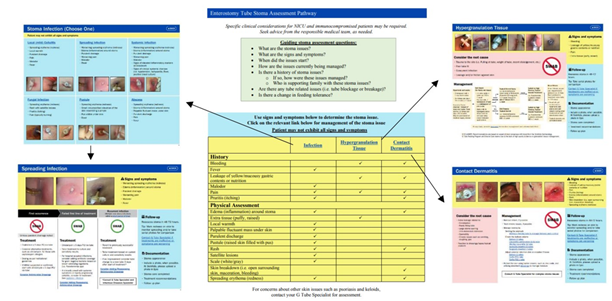
This QuickHit was informed by a new Enterostomy Tube Stoma Assessment Clinical Practice Guideline (CPG) from SickKids.
BACKROUND:
Many children with medical complexity rely on enteral feeding tubes to support nutrition, hydration, and/or medication administration. An enterostomy stoma is the hole in the abdomen that is created by a doctor that leads to the stomach or intestine. The stoma is where the enterostomy tube is inserted into.
Enterostomy tube stomas are potential sites of skin infection, granulation tissue, skin breakdown, and/or sensitivity. A lack of information or experience with assessment of stoma issues may lead to unnecessary diagnostic testing (e.g., swabs), overtreatment with antibiotics, avoidable costs to family for healthcare visits, and increased health care use (e.g., clinic and emergency visits).
Stoma infections occur on a continuum, from mild to severe, with accurate assessment, diagnosis, and treatment leading to optimal outcomes for children. The Enterostomy Tube Stoma Assessment Clinical Practice Guideline (CPG) promotes a standardized and evidence-based approach to the assessment and management of common stoma issues encountered by families and nurses in homecare, such as infection.
ASSESSMENT:
When a child is experiencing stoma issues, there are several assessment questions to be considered including:
- What are the signs and symptoms?
- When did the issues start?
- How are the issues currently being managed?
- Is there a history of stoma issues?
- If so, how were these issues managed in the past?
- Who was supporting the child’s family with these stoma issues?
- Are there any tube related issues (e.g., tube blockage or breakage)?
- Is there a change in the child’s feeding tolerance?
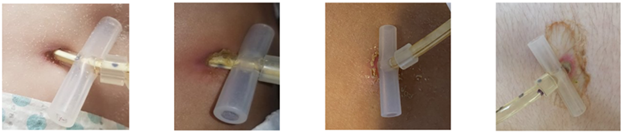
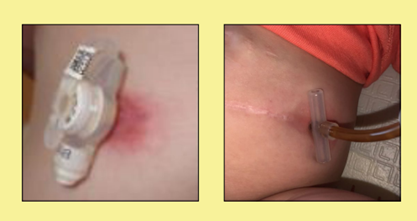
Healthy stomas may have a distinct pink, red or darker ring around it, that does not spread across the abdomen. It is normal for thin, clear yellow or green sticky drainage to be present around the stoma. The drainage can be cleaned daily with soap and water to prevent build up. The photos below are example of healthy stomas.
Signs and symptoms of a stoma infection may include the following:
- Local Infection
- Spreading redness around the stoma
- The skin feels warmer around the stoma than the rest of the skin
- Purulent drainage from the stoma
- Pain or increased tenderness to stoma
- Foul smell from stoma
- Presence of pus filled pimple or palpable abscess under skin near stoma
- Fever
- Systemic Infection
- Worsening pain and spreading redness around the stoma
- Swelling around the stoma
- Signs of clinical systemic changes (e.g., hypotension, tachypnea, tachycardia, abnormal body temperature, irritability, lethargy)
RECOMMENDATION:
Connected Care, informed by the Enterostomy Tube Stoma Assessment CPG, recommends the following in the assessment and management of stoma infections:
- Prevention
- Stoma infections can be prevented through routine stoma care, including:
- Daily cleaning of the skin and tube with mild soap and water
- Keeping the stoma dry and open to air
- Washing your hands before handling the tube and stoma
- Avoiding the use of dressings, creams and ointments around the stoma unless advised or prescribed by the child’s clinical team
- Stoma infections can be prevented through routine stoma care, including:
- Screening
- Utilize the CPG to assess the stoma and help determine the issue (e.g., infection, hype granulation tissue, or contact dermatitis).
- If redness around stoma is present, mark redness on skin to monitor spreading and/or take serial photos for comparison.
- Testing
- Wound swabs are not routinely recommended for G tube site infections because all wounds are contaminated with microorganisms. Follow to the CPG to guide your decision making about when to obtain a wound swab. When appropriate, the technique for swabbing the site is the Levine wound swab technique.
- Treatment
- The algorithms outlined in the CPG include recommendations for management based on the severity and type of infection (e.g., local infection, spreading infection and systemic infection, fungal infection). Follow the recommendations based on your scope of practice or assigned responsibilities.
- If a local stoma infection is suspected, contact the child’s local G tube Specialist during business hours. If there is concern for systemic infection, seek urgent medical attention for the child.
- Close follow-up and frequent assessment of the stoma is recommended after initiation of treatment (48-72 hours), as well as documentation of the stoma appearance (photos encouraged), treatment recommendations, and follow-up plan.
The following AboutKidsHealth article reviews prevention and management of stoma infections: G/GJ tubes: Preventing and managing infection