SITUATION:
This QuickHit was developed to support Connected Care’s expanded family education programming to include Bladder Irrigation and Bladder Instillation with Tobramycin
BACKGROUND:
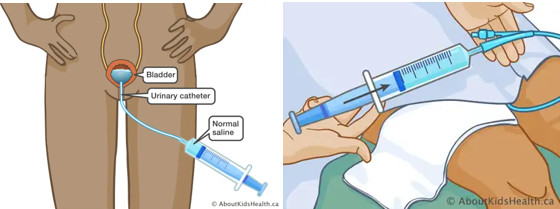
Bladder irrigation involves flushing a prescribed volume of normal saline through a urinary catheter into the bladder. Bladder irrigation may be prescribed for children who have mucous/debris in their bladder or to keep a urinary catheter free from blockages.
Bladder instillation involves administering medication into the bladder through a urinary catheter, keeping the medication in the bladder for a prescribed period (typically 1-2 hours) and then draining it. Common medications include tobramycin, hyaluronic acid, and N-acetylcysteine. Medication preparation may require drawing up the solution from a vial using a needle and syringe, as outlined in the child’s prescription.
Aseptic technique is essential during both procedures to prevent the introduction of bacteria into the bladder and reduce the risk of Urinary Tract Infection.
ASSESSMENT:
The following key terms and concepts support safe and consistent practice during bladder irrigation and instillation:
Urethra: A pathway in the body that carries urine from the bladder to the outside of the body
Urinary Catheter: A thin tube inserted into the urethra that drains urine from the bladder. Catheters may be:
- Intermittent: Inserted for a short time, then removed
- Indwelling: Left in place for a longer period (e.g., overnight)
Catheter Tip Syringe: A syringe with a tip designed to fit securely into a urinary catheter. It may be filled with normal saline or medication. A protective cap helps maintain cleanliness when not in use.
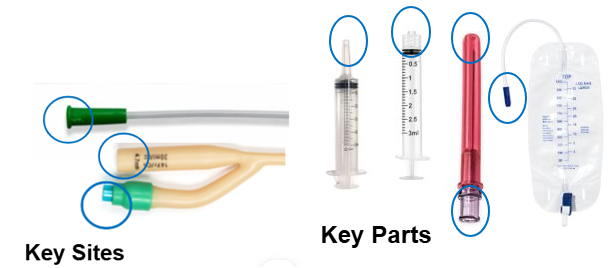
Aseptic Non-Touch Technique (ANTT): A technique used during procedures to reduce the risk of introducing microorganisms. It involves avoiding contact with key parts of equipment and key sites once they are clean.
Key Site: Any area where microorganisms can enter the body. For urinary catheters, this includes the catheter connection point (where syringes or drainage bags attach).
Key Part: Any part of equipment that comes into direct contact with a key site or another key part (e.g., the tip of a catheter syringe, a drainage connection, or a needle)
RECOMMENDATION:
Connected Care recommends the following to reduce the risk of infection during bladder irrigation and instillation:
- Follow appropriate storage instructions for normal saline to reduce the risk of contamination. For commercially prepared normal saline, always refer to the product label, as many are intended for single use only. If preparing normal saline at home, follow the instructions outlined in this resource.
- Wash your hands with soap and water before performing bladder irrigation or instillation.
- Review the video below showing how to protect key sites and parts during bladder irrigation. Key concepts of ANTT that are outlined include:
- Avoid touching key parts or key sites directly with your hands.
- Keep syringe tips capped until immediately before use.
- Clean the catheter end before every connection. Scrub the catheter end with an alcohol swab for 15 seconds, then allow it to air dry for 15 seconds before attaching any supplies.
- Note: if you are not a family caregiver, wear gloves in addition to performing hand hygiene.
- Use single-use equipment and supplies appropriately. Dispose of urinary catheters, alcohol swabs, needles and medication preparation syringes after each use.
- Sterilize catheter tip syringes with vinegar after each use. See the “After the Procedure” section in this resource. These syringes may be reused for up to one week, if clean and intact. Inspect before each use and discard if damaged or visibly dirty.
For additional information, review AboutKidsHealth resources: