SITUATION:
This QuickHit describes the contents of a central venous access device (CVAD) emergency kit and outlines how to use it to manage CVAD complications in home and community settings.
BACKGROUND:
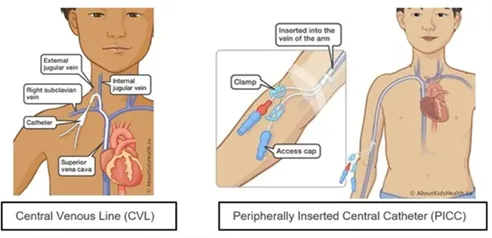
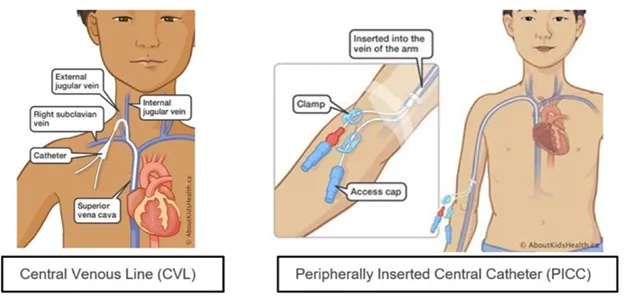
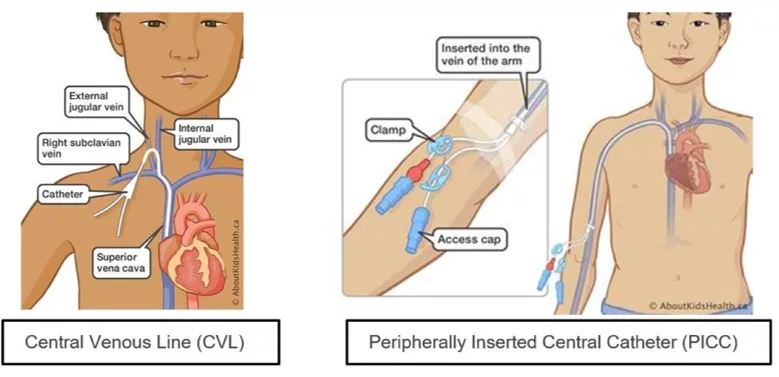
Many children with medical complexity rely on CVADs in home and community care for long-term intravenous therapy including medication administration, parenteral nutrition, dialysis, hydration, and blood sampling. Types of CVADs include central venous lines (CVLs), peripherally inserted central catheters (PICCs), and subcutaneous ports.
CVAD-related complications can occur unexpectedly and may include catheter damage, accidental dislodgement, or loss of the cap or dressing. To support timely and safe management of these events, it is essential for children with CVADs to always have a fully assembled CVAD emergency kit readily available.
ASSESSMENT:
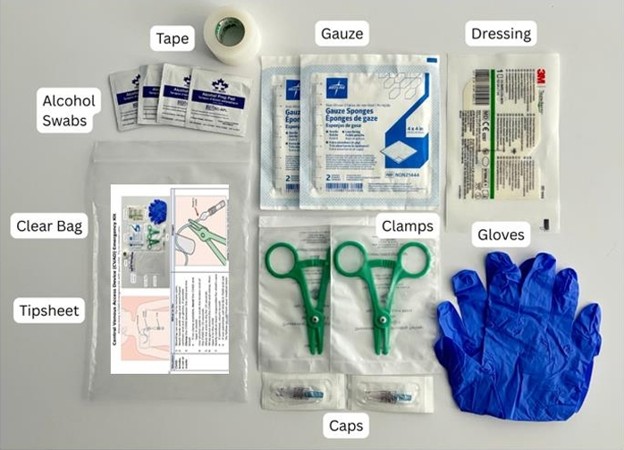
A CVAD emergency kit contains the supplies required to manage CVAD emergencies and includes:
- Clean gloves: to maintain hand hygiene and reduce contamination when handling the CVAD.
- Clamp (one per lumen): to immediately clamp a damaged or leaking catheter. If clamps are unavailable, fold the catheter on itself and secure it with tape.
- Needleless cap connector (one per lumen): to replace a cap if it becomes disconnected.
- Transparent dressing: to cover the catheter exit site if the dressing becomes loose, damaged or falls off.
- Alcohol swabs: to clean external CVAD surfaces including caps and visibly contaminated areas.
- Large sterile gauze: to apply pressure to the catheter exit site if bleeding occurs or to cover exposed portions of the catheter.
- Tape: to secure gauze or to secure a folded catheter when clamps are not available.
- CVAD emergency kit tipsheet: for step-by-step guidance on managing CVAD emergencies.
RECOMMENDATION:
Connected Care recommends the following best practices for managing CVAD emergencies in home and community settings:
- Ensure a fully assembled CVAD emergency kit remains with the child at all times. If any supplies are used from the kit, ensure they are replaced promptly.
- Substitute alternative dressings or tape in the CVAD emergency kit as needed to meet the child’s individualized care needs, such as allergies or skin sensitivities.
- Provide education to the child and their caregivers on recognizing and responding to CVAD emergencies, including catheter damage, dislodgement, disconnected caps or loose dressings.
- Review the CVAD emergency kit tipsheet and instructional video for step-by-step instructions on safely managing CVAD emergencies.
For additional support related to CVAD management, consider initiating a consult through Connected Care Live.