SITUATION:
This QuickHit was informed by consults from family caregivers and home care providers who identified a need for decision‑making support when gastric aspirate pH from a nasogastric (NG) tube is greater than 5.5.
BACKGROUND:
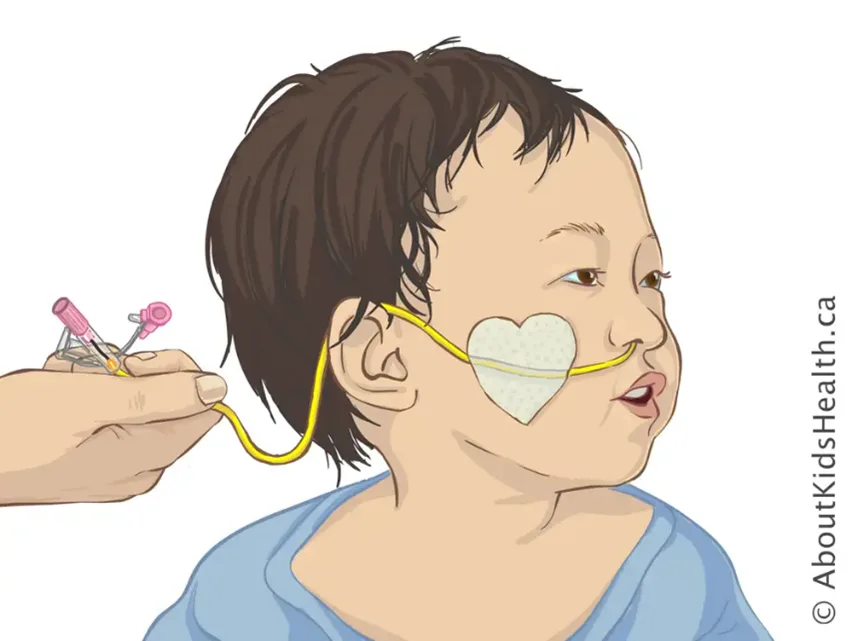
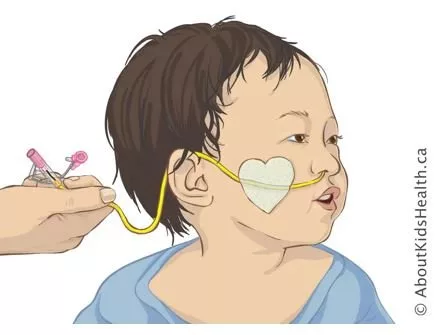
Children with medical complexity may rely on NG tubes to support nutrition, hydration and/or medication administration. With the increasing use of NG tubes in home and community settings, careful assessment and clinical decision‑making are essential to ensure safety and prevent complications such as aspiration, tube migration, and dislodgement.
ASSESSMENT:
Placement of the NG tube is confirmed by measuring the pH of gastric aspirate using pH test strips.
NG tube placement is checked:
- Before using the NG tube for feeds, fluids or medications
- After insertion of a new NG tube
- If there is concern that the NG tube may have moved or come out
- If the child is choking, vomiting, coughing or has a change in breathing
- Every 8 hours during continuous feeds
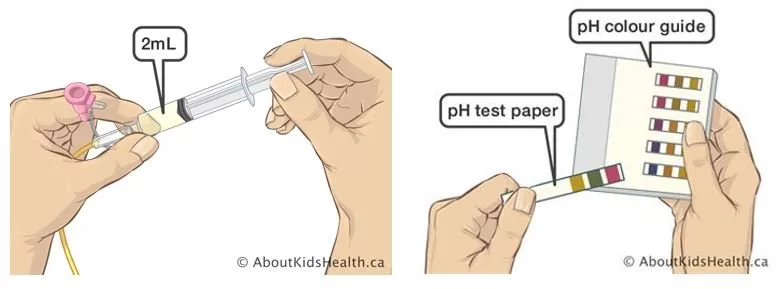
Placement of the NG tube can be confirmed via pH testing of the gastric aspirate by performing the following steps:
- Attach an empty syringe to the adapter on the NG tube and gently flush with 1 to 2 mL air to clear the tube
- Pull back on the plunger to withdraw about 2 mL of stomach contents
- Wet pH testing paper with the stomach contents and compare the colour of the strip with the label on the container
A pH of 5.5 or below indicates correct placement. You can also ask your child’s healthcare provider what pH range to expect for your child.
RECOMMENDATION:
Connected Care recommends the following when the pH of the gastric aspirate is greater than 5.5:
- A pH above 5.5 does not always mean the NG tube is incorrectly placed. The NG tube may still be in the stomach if the child is:
- being continuously fed or has been recently been fed (orally or via NG Tube)
- receiving medications that suppress gastric acidity (e.g. omeprazole, lansoprazole, calcium carbonate)
In these situations, assess the aspirate and consider whether it looks like the child’s usual stomach contents.
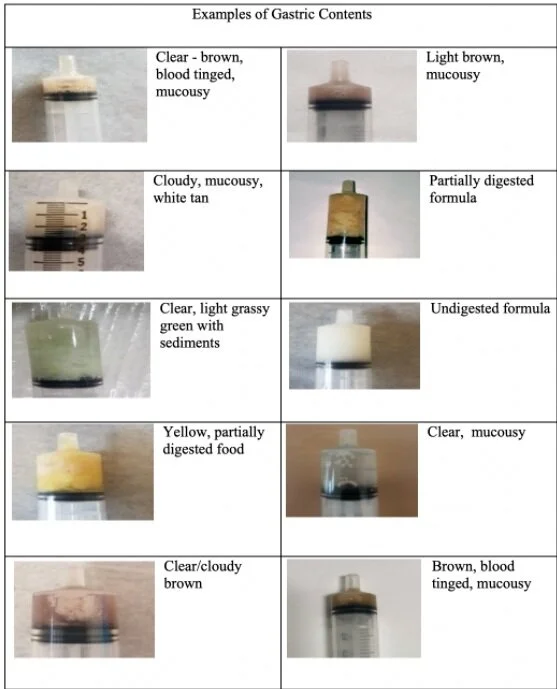
- If it does, you may decide to use the NG tube while closely monitoring the child for signs of feeding intolerance or breathing difficulty.
- If the child is not receiving acid‑suppressing medications and has not been fed recently, a pH greater than 5.5 may indicate that the NG tube is in the small intestine or lungs.
- Do not use the NG tube if there is any concern that it is not in the stomach.
- Remove and re‑insert the NG tube if you know how to do so and then confirm placement again using pH testing.
- If you are unsure at any point and/or require support with troubleshooting, initiate a consult on Connected Care Live to speak in real time with a nurse for support and guidance.
For additional information, review AboutKidsHealth resources: