SITUATION:
This QuickHit was informed by questions from community/home care providers and families regarding the best way to vent a Gastrostomy tube (G tube) to release excess gas form the stomach, including how to properly use a Farrel Valve Bag as a method of venting.
BACKGROUND:
A G tube is a type of feeding tube that goes directly into a child’s stomach to give liquid nutrition, medication and/or other fluids. Venting a G tube means letting air or gas out of a child’s stomach through the end of the tube to relieve fullness, bloating or discomfort.
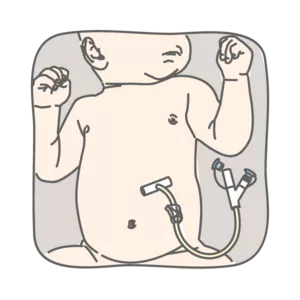
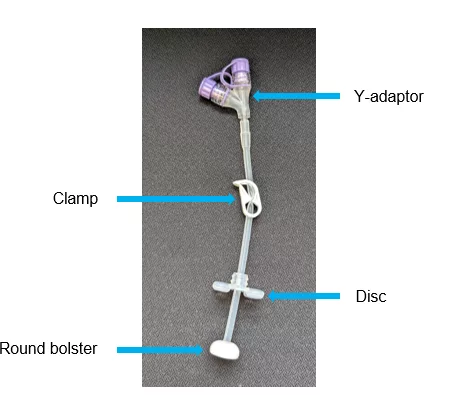
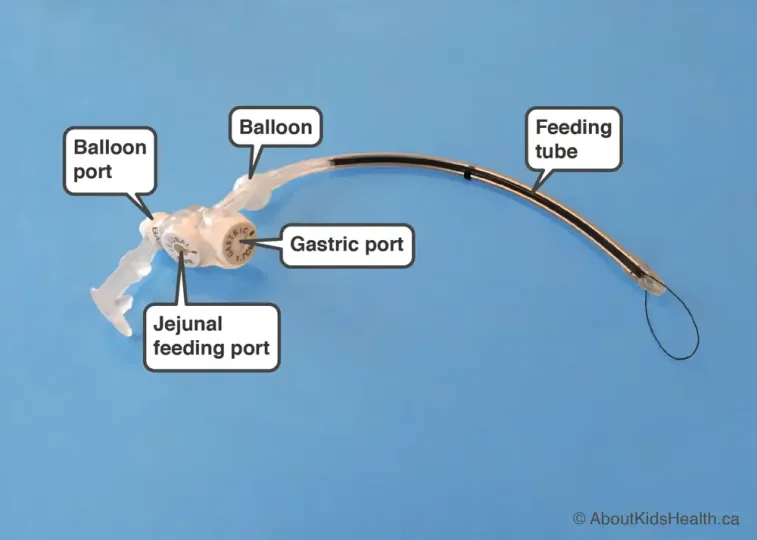
Certain types of tubes, such as Combination Gastrostomy/Gastrojejunostomy (G/GJ) tubes, have two ports. One port goes to the child’s stomach (gastric port), and the other port goes to the child’s small intestine (jejunal port) as shown below. You can only vent a child’s stomach through the G port of a G/GJ tube.
ASSESSMENT:
What causes fullness and bloating?
- Giving feeds too quickly
- Giving feed volumes that are too large
- Swallowing air or giving extra air through the feeding tube during feeds
- Reflux
- Constipation
Assessments to make when deciding if venting is needed:
- Inspecting the shape and size of the abdomen
- Auscultation for bowel sounds
- Palpation for pain/discomfort
- Signs and symptoms of feeding intolerance (pain, discomfort, vomiting, burping, feelings of fullness or bloating)
Factors to consider when choosing a method of venting may be:
- The child’s mode of feeding (bolus vs continuous)
- The type of tube the child has (G or G/GJ tube)
- The equipment the family has available
- What method works best for the child
- Child’s care plan (e.g. when, how often, and how much you can vent the stomach)
RECOMMENDATION:
Connected Care recommends the following when venting a G tube or the gastric port of a G/GJ tube:
- Partner with the child’s family caregiver to determine if venting is a part of their daily routine, if the child may benefit from their tube being vented, and discuss which venting method would be most appropriate for the child based on their needs.
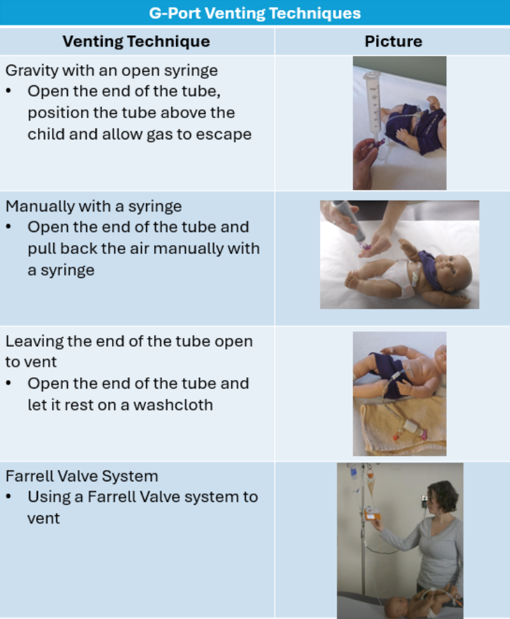
- There are four different ways to vent the stomach using a G tube or a G/GJ tube. See chart or video below:
- If you are venting via a G tube, be sure to vent before starting a feed or giving medications. If the child’s tube requires an extension set, this must be attached when you vent the tube. You can apply gentle massage to the child’s stomach to move air out via the G port.
- Wait at least 30 minutes after giving medications or a bolus feed before venting the stomach.
- Never vent a GJ tube or a J tube. Combination G/GJ tubes are vented from the gastric port only. With a Combination G/GJ tube, it is possible to continuously feed into the jejunum port while venting from the G-port in the stomach.
- For continued bloating, discomfort, or signs of feeding intolerance unrelieved by venting, partner with the child’s family caregiver on next steps that may include contacting the G tube Nurse Specialist, the child’s medical team, or seeking medical attention.
More Information
For more information about enteral tubes and venting, please visit: