SITUATION:
This QuickHit was informed by inquiries about the use of Clik-FIX® securement devices for central venous access devices (CVAD) in home and community settings.
BACKGROUND:
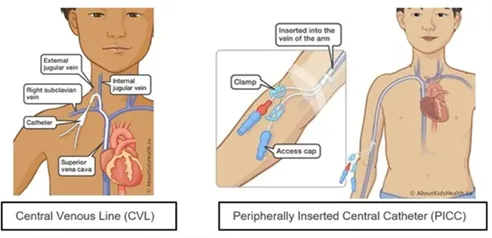
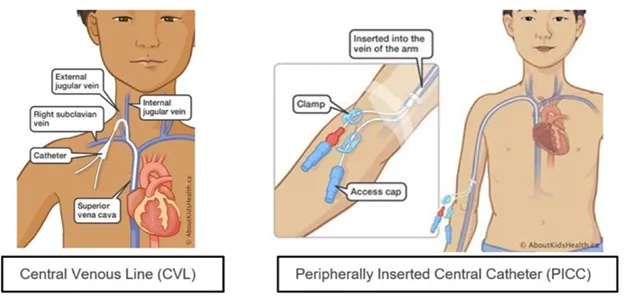
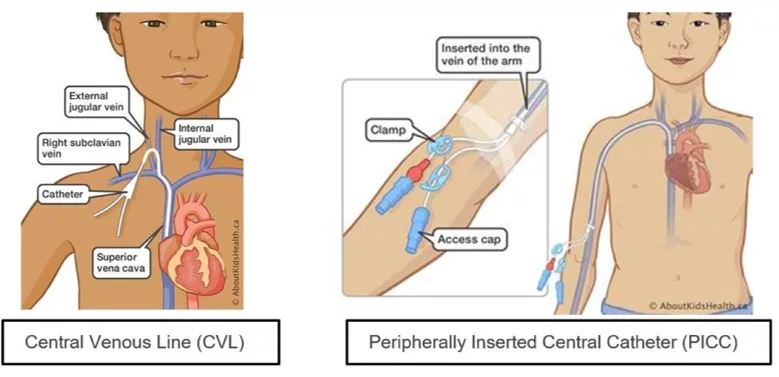
Many children with medical complexity rely on CVADs in home and community care for long-term intravenous therapy including medication administration, parenteral nutrition, dialysis, hydration, and blood sampling. Types of CVADs include central venous lines (CVL) and peripherally inserted central catheters (PICC).
Securement devices are an important method of stabilizing and preventing accidental dislodgement of CVADs. Common types of CVAD securement devices used in home and community care settings include Clik-FIX® and StatLock™.
ASSESSMENT:
Clik-FIX® securement devices are available in size small (for CVADs 3 French or smaller) and size large (for CVADs 4 French or larger). As shown below, the Clik-FIX® has three main parts.
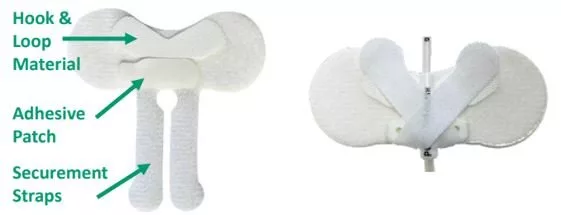
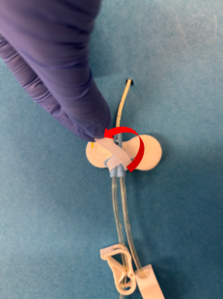
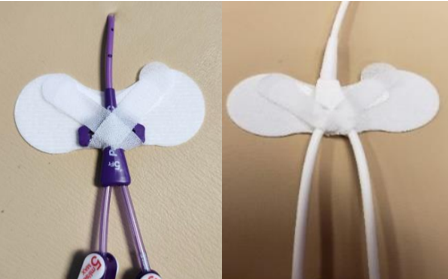
Clik-FIX® securement devices can be used to secure CVADs with wings. Once the CVAD wings are placed on the adhesive patch, the securement straps are folded and crossed diagonally toward the CVAD exit site to touch the Hook & Loop velcro as shown below. Clik-FIX® can also be used to secure double lumen CVADs without wings. In this case, the securement straps are crossed diagonally between the two lumens and toward the CVAD exit site as shown below.
RECOMMENDATION:
Connected Care recommends the following best practices when caring for a child with a Clik-FIX® CVAD securement device in home and community:
- Assess the child’s CVAD site, securement device and dressing daily and as needed to ensure that it is clean, dry and intact.
- Clik-FIX® securement devices are replaced when the CVAD dressing is changed. Change the CVAD dressing and securement device every 7 days and as needed if loose or soiled using aseptic non touch technique.
- When applying a new Clik-FIX® during a CVAD dressing change:
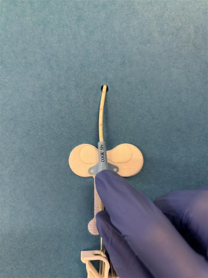
- Remove paper covering on adhesive patch and align the CVAD wings (if present) with the securement straps. Press the wings into the adhesive patch (see image 1 below).
- Cross and fold the securement straps toward the CVAD exit site (see image 2 below)
- Remove the backing of the Clik-FIX® and place it directly on the skin. If possible, loop the CVAD to provide extra slack to reduce the potential of accidental catheter breakage or dislodgement.
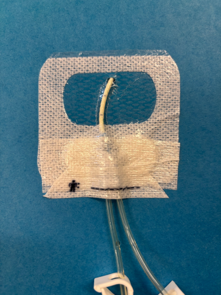
- Apply the primary CVAD dressing, ensuring the exit site is visible and the Clik-FIX® is covered. If needed, use accessory dressings to cover any exposed portions of the Clik-FIX® (image 3 below).
- Initiate a Connected Care Live consultation for real-time support on how to place, use or remove CVAD securement devices.
- Explore options for alternative securement devices if a Clik-FIX® securement device is not available. Review this Quick Hit that outlines best practices and alternative methods for securement of CVADs.
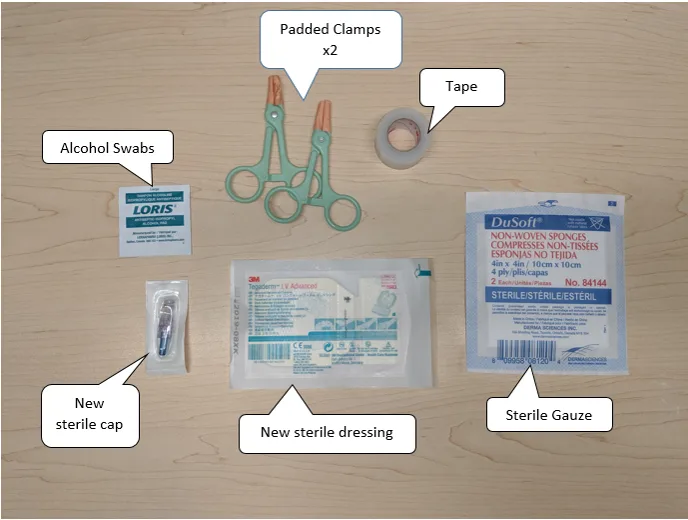
- Ensure that a fully assembled CVAD emergency kit remains with the child at all times in case of accidental dislodgement. Review this video on how to manage dislodgements and other CVAD emergency procedures.