SITUATION:
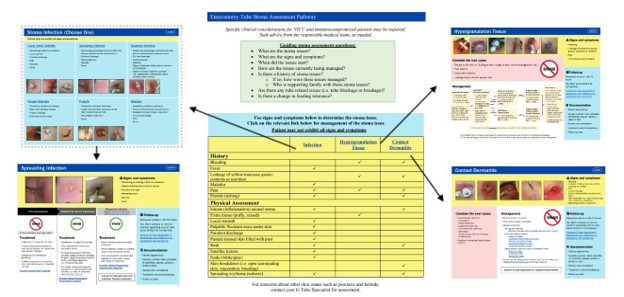
This QuickHit was informed by recent updates to the Enterostomy Tube Stoma Assessment Clinical Practice Guideline (CPG) at SickKids.
BACKGROUND:
Many children with medical complexity rely on enteral tubes to support nutrition, hydration, and/or medication administration. Enteral tube stomas are at risk for complications such as skin infection, granulation tissue, skin breakdown, and/or sensitivity. Inconsistent assessment and management can lead to unnecessary swabbing, inappropriate antibiotic use, increased healthcare visits, and added costs for families.
The Enterostomy Tube Stoma Assessment CPG provides a standardized, evidence-based approach to managing common stoma issues. Recent updates strengthen guidance to support accurate assessment and appropriate management in home and community settings.
ASSESSMENT:
Stoma complications (e.g., infection, granulation tissue, dermatitis) are common and require accurate assessment and targeted management to promote healing and prevent escalation. Key practice updates in the CPG include:
- Stoma infection is a clinical diagnosis, based on signs and symptoms. Routine swabbing is not recommended unless results will guide management (e.g., recurrent or unclear infection).
- Therapeutic wound cleansing is a core component of infection management. Use of hypochlorous acid (e.g., Vashe™, PureCleanse™) is recommended when infection is suspected or confirmed to reduce bioburden and support healing.
- Granulation tissue management is now more individualized and flexible. This includes salt-based therapies (e.g., salt sprinkle) as accessible, home-based options.
These updates support consistent, evidence-based management in home and community to reduce unnecessary interventions and improve patient and family comfort, safety and experience.
RECOMMENDATION:
Connected Care recommends the following to support the assessment and management of stoma issues in home and community:
- Use the Enterostomy Tube Stoma Assessment CPG as a guide for standardized and evidence-based assessment and management of stoma issues.
- Assess for infection using signs and symptoms (e.g., erythema, drainage, pain, warmth, fever). Routine swabbing is not recommended and should only be performed if results will guide management.
- Use hypochlorous acid (e.g., Vashe™, PureCleanse™), available over the counter, for therapeutic cleansing when infection is suspected or confirmed:
- Soak a clean dry gauze with lukewarm solution
- Place gauze directly onto skin/tissue ensuring contact and let sit for 10-15 minutes
- Remove gauze and let skin/tissue air dry, no need to rinse
- Apply dressing if indicated
- Manage granulation tissue using an individualized approach based on access, tolerance, and previously effective methods. Consider salt sprinkle as a simple, accessible home-based option:
- Apply a small amount of table salt (¼ teaspoon) directly on granulation tissue or use a cotton swab to dab salt directly onto tissue
- Let salt sit for 10 minutes then rinse off with water
- Repeat daily for up to 1 week, as tolerated
- Escalate to the primary provider or specialty team if:
- Symptoms are worsening or not improving within expected timeframes
- There are signs of spreading or systemic infection
- There is uncertainty in diagnosis or management approach