SITUATION:
This QuickHit was informed by Just in Time Training with a home and community care provider who described being unsure about how to correctly perform an emergency tracheostomy tube change.
BACKGROUND:
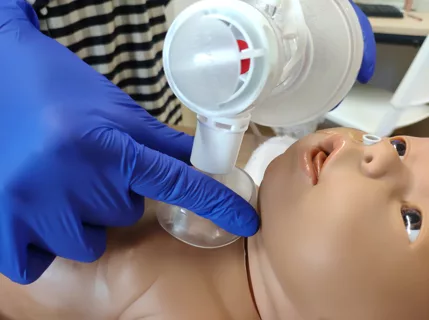
Tracheostomy tubes are to be changed on a routine and scheduled basis for infection control purposes, to inspect the integrity of the tube, and assess the stoma. A child’s hospital-based point of care team prescribes the frequency of routine tracheostomy tube changes, typically scheduled once a week and usually performed by two caregivers: a main person and an assistant.

Children who depend on artificial airways are at higher risk of requiring urgent interventions such as emergency tracheostomy changes. Emergency tracheostomy changes are unplanned. When caring for a child who depends on an artificial airway, it is necessary to be prepared to perform an emergency tracheostomy change at any time or anywhere. Ideally two caregivers are available, but at a minimum, one trained caregiver is required to safely complete an emergency tube change.
ASSESSMENT:
Do an emergency tracheostomy tube change, if:
- no air is passing in or out of the tracheostomy tube
- the tube is blocked by:
- thick secretions or a mucous plug
- a foreign body
- the tube is kinked or in the wrong position
- full tracheostomy tube decannulation
- difficulty passing a suction catheter into the tube
If the child has a tracheostomy tube with an inner cannula, change it out in the event of a blockage.
Consider an emergency tracheostomy tube change, if:
- the child is showing any signs of cardiopulmonary instability, such as:
- difficulty breathing
- change in respiratory/heart rate
- drop in oxygen saturations
- new or increased coughing
- change in or new noises from the tube
- the cuff (if there is one) is no longer working/inflating properly
- any time the child’s condition deteriorates, without other explanation
RECOMMENDATION:
Connected Care recommends the following for an emergency tracheostomy change:
- Being prepared to do emergency tracheostomy tube changes including partnering with family caregivers to have a plan for emergencies and routinely participating in scheduled tracheostomy changes.
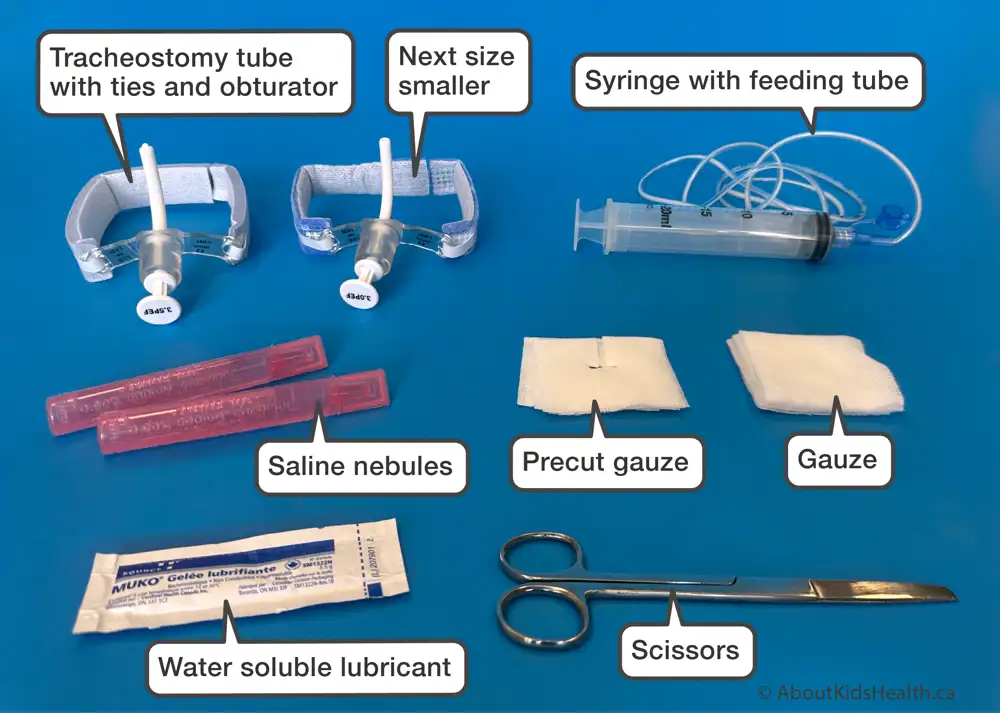
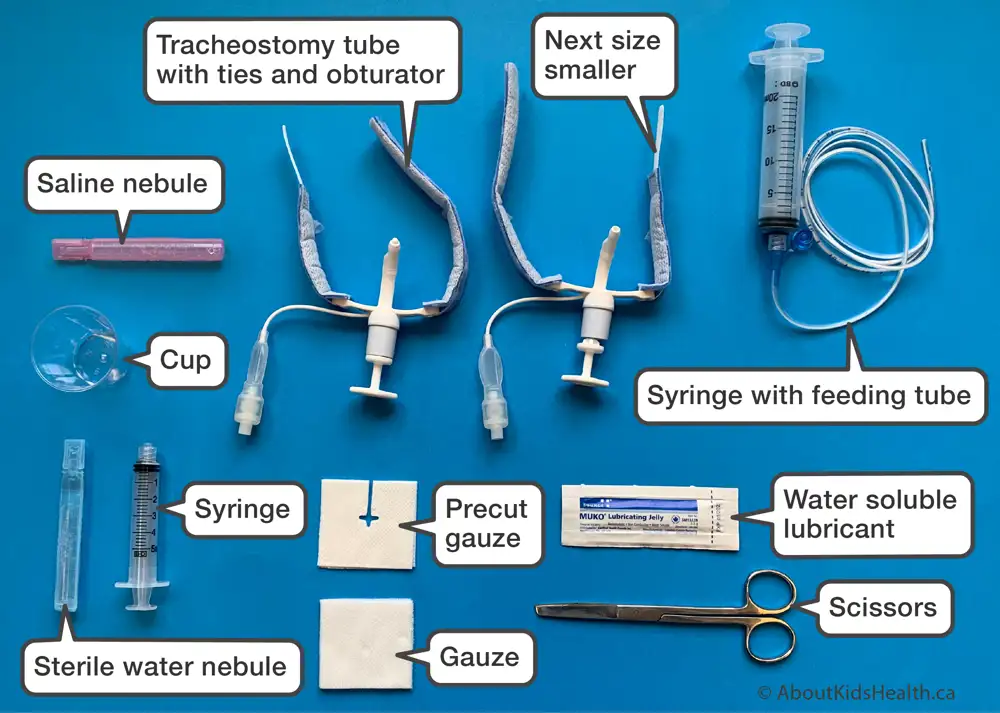
- At the beginning of each shift and when travelling with the child, always perform a safety check. Familiarize yourself with the emergency tracheostomy kit (see photo below). Know where it is kept, and double check that the contents are clean, in good condition and not past expiry dates. Ensure they the tracheostomy ties are attached. Keep this kit within arm’s reach in case of an emergency.
- If you’ve had to perform an emergency tracheostomy tube change, ensure you clean the used tube immediately so that it can be placed back in the emergency tracheostomy kit.
Emergency tracheostomy kit for an uncuffed trach
Emergency tracheostomy kit for a cuffed trach
In the event that an emergency tracheostomy change is indicated, immediately call for help, if available. This may include asking a family caregiver to assist or a bystander to call 911. When calling 911, inform them that it is pertaining to a child with a tracheostomy tube and indicate the status of the tracheostomy tube (e.g. decannulation). If assistance is not immediately available, the emergency trach tube change is to be performed independently and 911 called, if needed.

More information
Visit AboutKidsHealth for more information about tracheostomy changes.