SITUATION:
This QuickHit provides guidance for determining when a CVAD dressing needs to be changed sooner than routinely scheduled changes in home and community settings.
BACKGROUND:
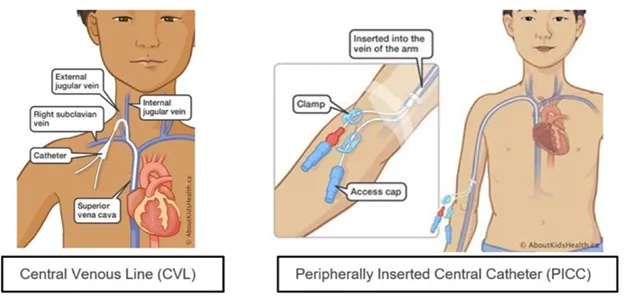
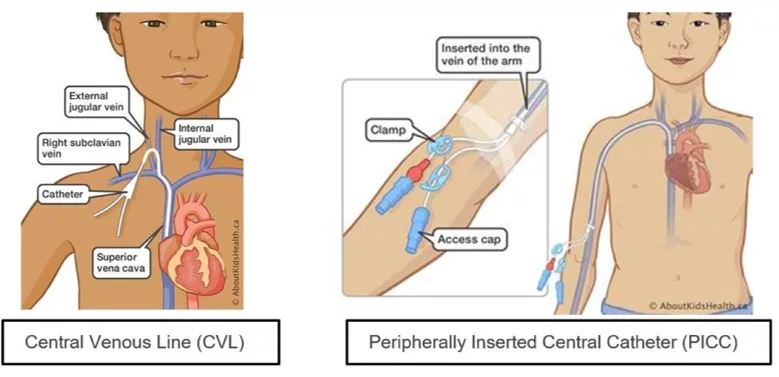
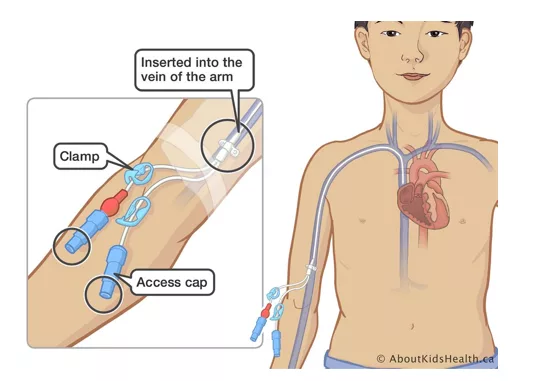
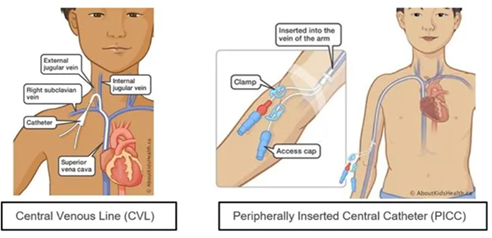
Children with medical complexity rely on CVADs in home and community care for long term intravenous therapy including medication administration, parenteral nutrition, dialysis, hydration and blood sampling. Types of CVADs include central venous lines (CVL) and peripherally inserted central catheters (PICC).
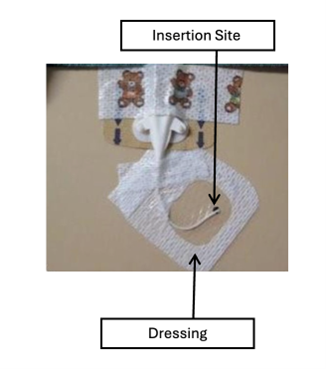
The dressing on a CVAD is occlusive and protects the insertion site which is the area where the catheter enters the body. This insertion site must remain covered with a clean, dry and intact dressing to prevent bacteria from entering and causing a Central Line Associated Blood Stream Infections (CLABSI). Most children use transparent, semi-permeable dressings (e.g., IV Advanced Tegaderm® or IV 3000®).
ASSESSMENT:
The frequency of CVAD dressing changes depends on the dressing type and a recommended schedule will be outlined in the child’s care plan. Routine dressing changes are typically every 7 days using Aseptic Non Touch Technique (ANTT). In addition to routine changes, unscheduled dressing changes are needed if the dressing is:
- Soiled
- Damp or wet
- Lifting
- Blood approaching the dressing borders
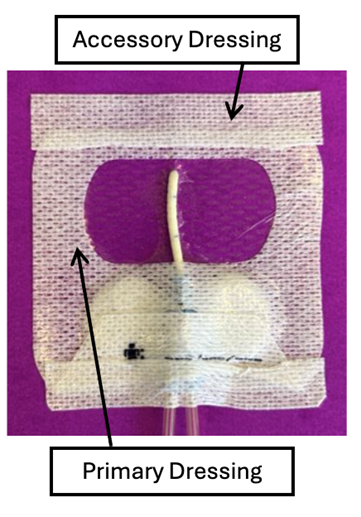
There are two main components of a CVAD dressing including primary and accessory dressings (see image below).
Primary dressing: The occlusive transparent dressing placed directly over and around the insertion site. The insertion site should always be visible through the transparent window.
Accessory dressing: Additional materials (e.g., tape strips) used to secure the primary dressing.
RECOMMENDATION:
Connected Care recommends the following to determine when to perform an unscheduled CVAD dressing change sooner than the routine scheduled change:
- Assess the CVAD dressing regularly to ensure that it is clean, dry and intact (e.g., after baths or showers). If soiled, wet or bleeding approaches the borders, perform a dressing change using ANTT.
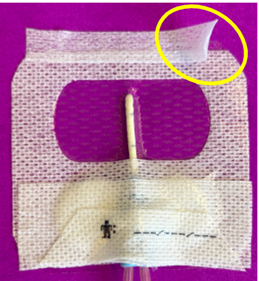
- If only the accessory dressing is lifting (see image 1 below), carefully remove and replace the accessory dressing. Do not reinforce the lifting accessory tape with additional tape.
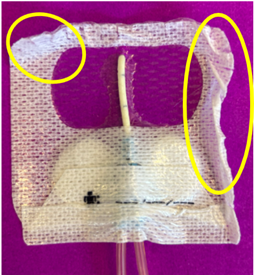
- If only the white borders of the primary dressing are lifting (see image 2 below), reinforce the white borders with tape and arrange for a dressing change when possible to prevent lifting of the transparent window. Do not wait for the next scheduled dressing change.
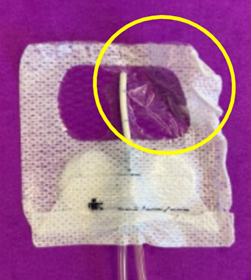
- If the transparent window is lifting (see image 3 below), have the dressing changed as soon as possible. If the dressing cannot be changed at home, bring the child to the local emergency room or clinic for an immediate dressing change.
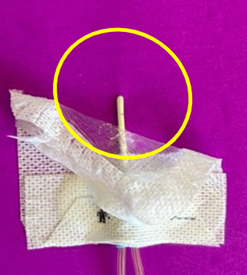
- If the insertion site is exposed and/or the dressing comes off (see image 4 below), apply a new primary dressing immediately. This extra primary dressing can be found in the child’s emergency CVAD kit. Perform a full dressing change using ANTT as soon as possible.